

Understanding Gaucher Disease for today and future generations.
Gaucher disease is an inherited genetic condition caused by changes (pathogenic variants) in the GBA1 gene, which provides instructions for making the enzyme glucocerebrosidase.
Gaucher disease is inherited in an autosomal recessive pattern. This means that a person generally needs to inherit a disease-causing variant in both copies of the GBA1 gene, one from each parent, to have Gaucher disease.
A person who has one disease-causing GBA1 variant and one working copy is called a carrier.Carriers generally do not develop Gaucher disease. However, they can pass the variant on to their children.
Important: Being a carrier is different from having Gaucher disease.
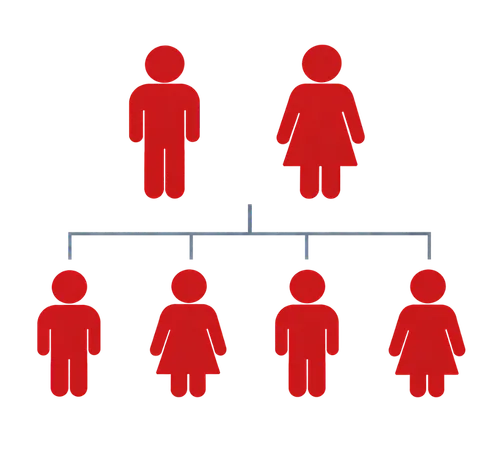
The inheritance pattern depends on the genetic status of both parents.

Has Gaucher disease

One mutated gene

No mutated genes
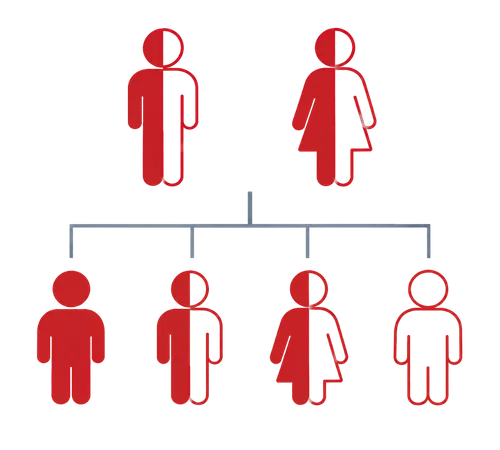
For each pregnancy, there is:
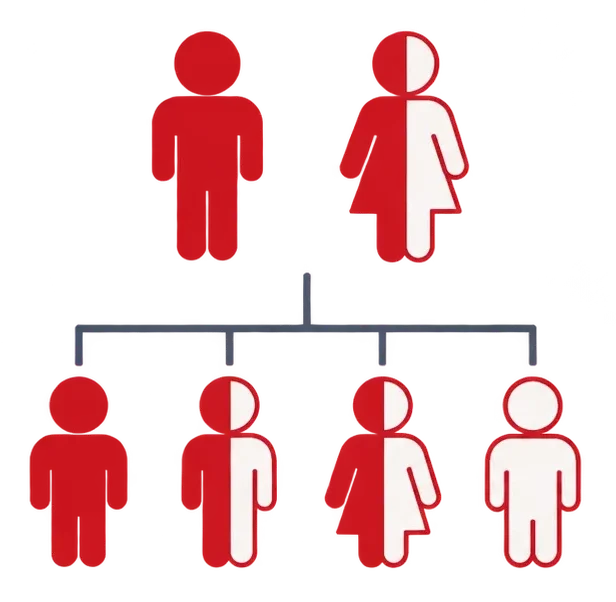
For each pregnancy, there is:
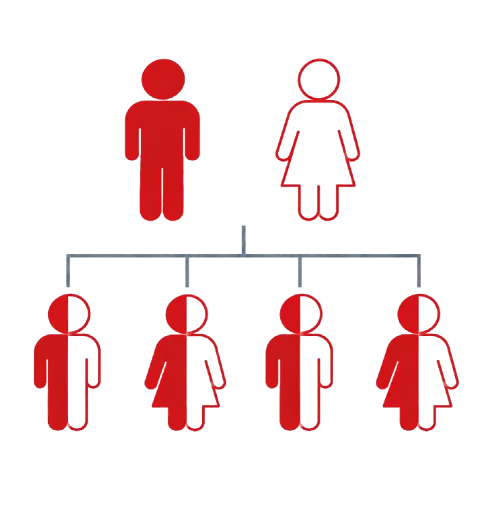
All children will inherit a GBA1 variant from the affected parent and will therefore be
carriers, but they would not be expected to have Gaucher disease.
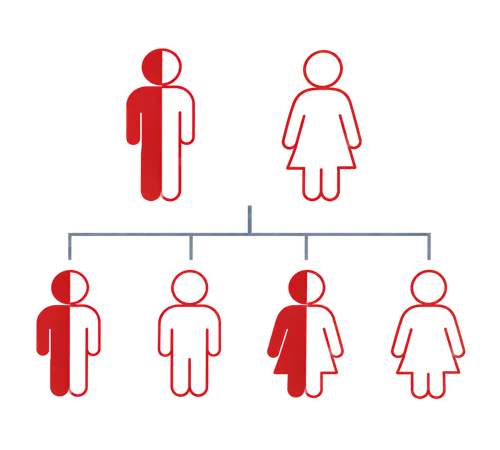
For each pregnancy, there is:
The child would not be expected to have Gaucher disease.
If both parents have Gaucher disease, both have two disease-causing variants in GBA1.
In the usual autosomal recessive inheritance pattern, all of their children would inherit two disease-causing variants and would have Gaucher disease.
This is uncommon and should be discussed with a specialist genetic counsellor when relevant.
Genetic testing can help identify disease-causing variants in the GBA1 gene.
Testing may be considered for people with Gaucher disease, family members who may be at increased risk of carrying a familial variant, and in some circumstances as part of family planning. The appropriate type of testing depends on the individual’s circumstances and whether the familial variants are already known.
If Gaucher disease runs in your family, speak with your healthcare professional or a genetics professional about whether genetic testing may be appropriate for you or other family members.
Once the disease-causing GBA1 variants in a family are known, genetic testing can help clarify the status of relatives. Genetic counselling can also provide information about reproductive options, including prenatal and preimplantation genetic testing where appropriate.
Because inheritance can be complicated, genetic counselling can help you understand what Gaucher disease may mean for you and your family.
A genetics professional can explain:
A genetic test should be interpreted in the context of your personal and family history. A healthcare professional or genetics specialist can explain which test is appropriate and what the results mean.
Whether you are living with Gaucher disease, caring for someone, or looking for information, this community is here to support you.
Registered Charity Number: 1192011
Company Limited by Guarantee Registered in England & Wales No. 06653373
This website is supported by our funders. The International Gaucher Alliance maintains full editorial independence, and our funders have no influence over the content published on this website.
© 2026 International Gaucher Alliance. All rights reserved.